
Yuzhi (Emrys) Zhou

Research fields:
Economics of Education, Labour Economics, Applied Microeconometrics
Job Market Paper:
When Ambitions Align: Peer Parental Aspiration and Student Achievement
Supervisor Panel:
Ashley Craig (Chair), Maria Racionero Llorente, and Johannes Kunz
Website:
Profile:
Yuzhi (Emrys) Zhou is a PhD candidate in Economics at the Australian National University. Her research examines how peers, families, and school environments shape educational outcomes and inequality. She uses microdata and causal inference methods to study the social influences on student achievement and household investment in education.
Her job market paper, When Ambitions Align: Peer Parental Aspiration and Student Achievement, investigates how the educational aspirations of classmates’ parents affect students’ academic outcomes. Her published research in Economics of Education Review examines how classroom rank and peer achievement influence investment in private tutoring.
Her public policy writing includes a submission on parental aspirations to the House of Representatives Standing Committee on Education’s inquiry into educational attainment followed by further evidence at the Committee’s hearing at Parliament House.
Yuzhi teaches undergraduate and postgraduate economics at ANU, including public economics and economic forecasting. She previously coordinated the Research School of Economics seminar programme, working closely with both professional staff and academics. She currently represents the Research School of Economics’ HDR students on ANU College of Business and Economics committees and serves on the Economic Society of Australia’s ACT Branch committee.
Man Hin Chio

Research fields:
Macroeconomics, Public Economics, Labour Economics and Health Economics
Job Market Paper:
Disability Benefit Reform, Employment and Welfare: Evidence from Australia’s Welfare-to-Work Reforms
Supervisor Panel:
Chung Tran (Chair), Timothy Kam, and Elena Capatina
Website:
https://sites.google.com/view/man-hin-iris-chio
Profile:
Man Hin (Iris) Chio is a PhD candidate in Economics at the Australian National University. She is a macroeconomist working on social security, labour supply and health economics, with a focus on disability. Her research studies people with disability in Australia: their income and employment, productivity, human capital accumulation, and reliance on social security. She combines instrumental-variable and difference-in-differences designs with heterogeneous-agent lifecycle models to evaluate how income support programs shape work and welfare and how they could be better designed.
Iris’s job market paper studies Australia’s 2005 Welfare-to-Work reform, which tightened eligibility for the Disability Support Pension (DSP) by lowering the work-capacity threshold from 30 to 15 hours per week. Combining a staggered difference-in-differences analysis of administrative data with a lifecycle model featuring disability risk, labour supply, work experience and benefit claiming, she shows that the reform reduced employment and earnings, as recipients cut their work to remain eligible. Her policy analysis shows that reforming the means test or the payment level, rather than tightening eligibility, raises employment, though at a fiscal cost or with weaker insurance for the most vulnerable.
Iris has extensive teaching experience, including delivering weekly tutorials, holding student consultations, and marking examinations. She has presented her work at seminars and conferences, and was awarded the Best Paper Prize at the 2026 HILDA Survey Research Conference.
Shulei Zhang

Research fields:
Development Economics, Health Economics, Labour Economics, Public Economics
Job Market Paper:
When Primary Care Collapses: Rural Economic Reform and Rising Mortality in China
Supervisor Panel:
Prof. Xin Meng (Chair), A/Prof. Ashley Craig, and A/Prof. Thomas Yang
Website:
https://shulei-zhang.github.io/
Profile:
Shulei Zhang is a development economist whose research lies at the intersection of health, labour, and public economics. She studies how institutional reforms and local policy design shape public service provision and household incentives, and how these changes affect health, fertility, and labour-market outcomes. Her work combines newly constructed historical data with causal inference methods to study the consequences of large-scale policy and institutional change.
Her job market paper, When Primary Care Collapses: Rural Economic Reform and Rising Mortality in China, studies the health consequences of China’s agricultural decollectivization, a productivity-enhancing reform that also weakened the collective institutions financing rural public services. Using a newly digitized county-by-year dataset and staggered difference-in-differences, the paper finds that mortality increased following the reform, with larger effects in counties where village-level health provision declined more sharply. Her broader research examines how policy interactions and local implementation shape fertility and labour-market outcomes.
Shulei has four years of teaching experience across microeconomics, labour economics, public economics, and applied econometrics, including three semesters as Head Tutor. She has extensive experience delivering tutorials, supporting assessment and course delivery, and coordinating tutorial teams.
Wending Liu
Research fields:
Economic Growth, Development Economics, Empirical Industrial Organization, Computational Economics
Job Market Paper:
Supervisor Panel:
Fedor Iskhakov (Chair), John Stachurski, Juergen Meinecke
Website:
Profile:
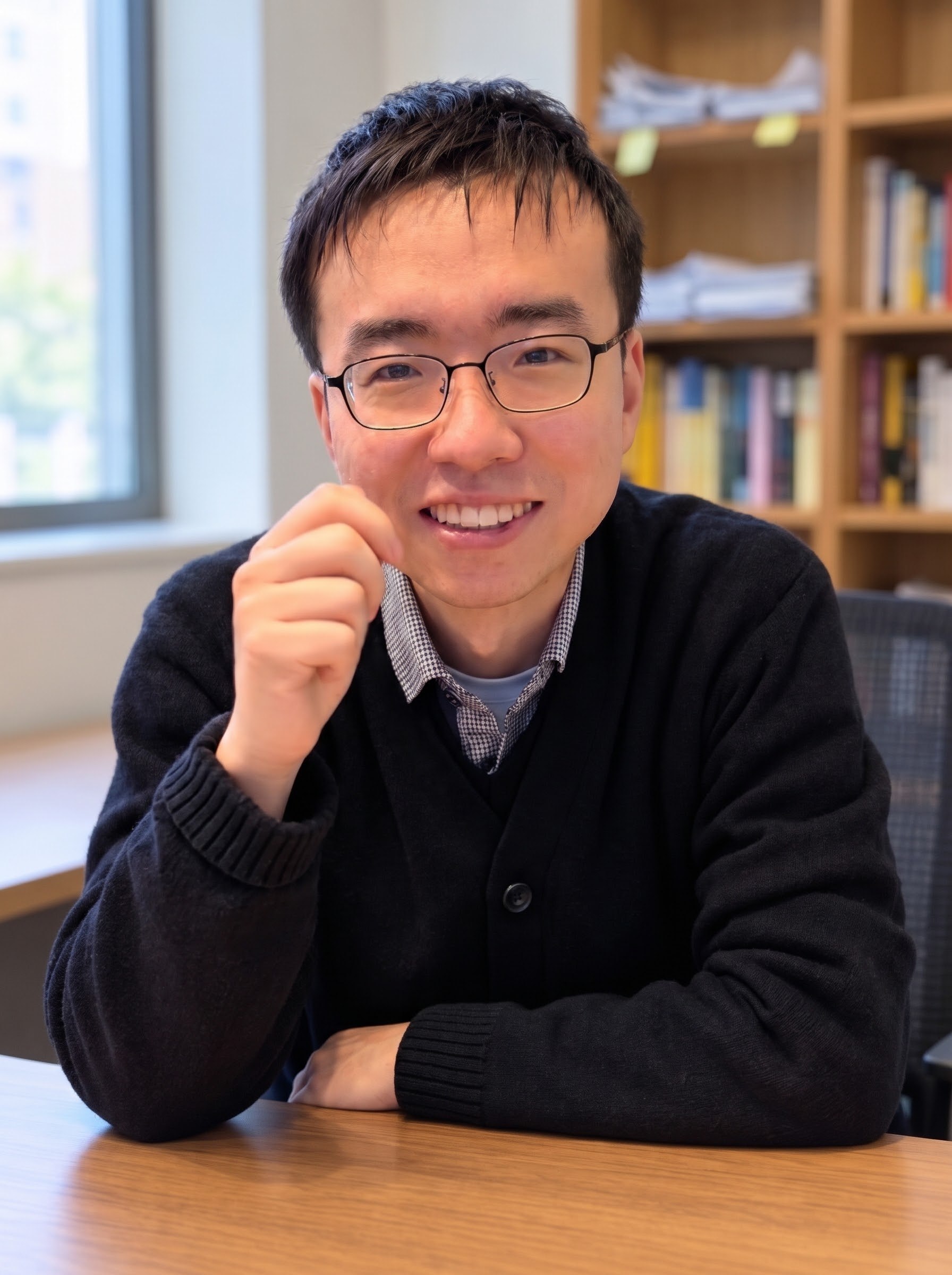
Wending Liu is a computational economist working at the intersection of economic growth, development economics, and empirical industrial organization. He designs algorithms to solve and estimate dynamic optimization and heterogeneous agent models, and applies them to analyze real-world questions in growth and development.
In his job market paper, Wending develops deep-learning-based simulation and estimation tools to study how government policies shape growth and wealth inequality in China and Korea through endogenous TFP growth, state and private investment, and human capital accumulation. His other papers include a novel algorithm for solving non-convex consumption-saving problems with a safety net, which have important applications in macroeconomics, and a structural estimation of the fiscal behavior of Chinese local governments through the lens of a Bertrand game.
Wending has extensive teaching experience in econometrics, microeconomics, and mathematical economics, and was nominated for an ANU Excellence in Tutoring Award.
Shu Hu
Research fields:
Computational and Mathematical Macroeconomics, Economic Inequality and Mobility, Household Finance
Job Market Paper:
Consumption and Wealth Tails in Heterogeneous-Agent Models: The Pareto Trap
Supervisor Panel:
Prof. John Stachurski, A/Prof. Timothy Kam and Prof. Fedor Iskhakov
Website:
Profile:
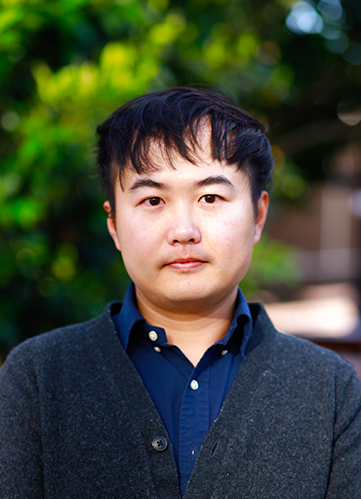
Shu Hu is a macroeconomist working where theory, computation, and microdata meet. He studies the upper tails of the wealth and consumption distributions, where modeling choices shape measured inequality, mobility, and the policy analysis built on heterogeneous-agent models.
His job market paper names and proves the Pareto trap: in the standard income-fluctuation framework, the condition that generates a realistic Pareto wealth tail forces consumption to inherit it, yet household survey data from eight countries show a strictly thinner consumption tail. Models caught in the trap can overstate the top 1 percent consumption share more than fourfold. His thesis develops two ways out, convex liquidation costs and direct utility from wealth, and turns measured tail index pairs into quantitative targets for heterogeneous-agent models. The paper will be presented at the Econometric Society Australasian Meeting on 27 November 2026.
Shu has been a research associate and lead developer at QuantEcon since 2020, where he led the teams behind several lecture series used worldwide. He has taught across the ANU economics curriculum since 2019 (18 course-semester appointments, ten as head tutor or associate lecturer, with recent student ratings of 4.9 and 4.7 out of 5).
Rongzhao Zhu

Research fields:
Applied Game Theory, Labor Economics, as well as Micro, Behavioral, and Experimental Economics
Job Market Paper:
Time and Income Allocation in Non-cooperative and Cooperative Families
Supervisor Panel:
José A. Rodrigues-Neto (Chair), Han Bleichrodt, Idione Meneghel, Ruitian Lang, Ronald Stauber
Website:
Profile:
Rongzhao Zhu is a highly active PhD candidate in Economics at the Australian National University. His research applies game theory and microeconomic theory to study public policy, household decision-making and bargaining, and status goods. Rongzhao also contributes to preference measurement in experimental economics.
Rongzhao’s job market paper, Time and Income Allocation in Non-cooperative and Cooperative Families, analyses non-cooperative Nash equilibrium and cooperative bargaining within a family. The paper shows that an increase in one spouse’s wage can reduce the other spouse’s welfare under either non-cooperation or cooperation. Furthermore, cooperation enlarges the parameter region in which these welfare conflicts occur. Such conflicts may create incentives for economic sabotage within marriage and affect the probability of divorce.
Household decisions regarding external, parental, and grandparental childcare, as well as subsidy policies and welfare, are also research topics that Rongzhao pursues. He also studies the taxation of status goods and develops novel methods for measuring prudence under risk and ambiguity.
Rongzhao has a passion for teaching and four years of experience across undergraduate and postgraduate economics at ANU, including behavioral economics, game theory, and microeconomic analysis. Using his strong communication skills, his teaching emphasizes encouragement, economic intuition, rigorous reasoning, and support for students from diverse academic backgrounds.