10-12 February 2027 at The Australian National University, Canberra (Australia)
Organisation: ANU Centre for Economic History
Organisers: Tim Hatton, Pierre van der Eng, Martine Mariotti, Nicholas Brown, Motohiro Kumagai.
Sponsored by:
- Research School of Economics, The Australian National University
- Economic History Society of Australia and New Zealand (EHSANZ)
Submissions due date: Email your proposed paper and/or abstract by 23 October 2026 to: CEH.RSE@anu.edu.au
Call for nominations: EHSANZ Asia-Pacific Prize in Economic History for the best 2024-2025 PhD or Master thesis (due 1 December 2026)
Asia-Pacific Economic and Business History Conference, Canberra (Australia) 10-12 February 2027
Papers and proposals for sessions are invited for the 2027 APEBH conference. This year’s conference will be held at the Australian National University on 10-12 February 2027. It is organized by the ANU Centre for Economic History and generously sponsored by ANU’s Research School of Economics and the Economic History Society of Australia and New Zealand.
Researchers across a broad range of disciplines are warmly welcomed. Early career researchers are encouraged to participate. Due to generous sponsorship of the event, the conference registration fees are low. We especially encourage submissions from PhD students for whom a limited number of travel grants are available on application.
We welcome proposals on all topics in economic, social, and business history, as well as proposals for sessions on specific themes. We are particularly interested in papers related to the conference theme: ‘Innovation - Historical Perspectives from Asia-Pacific and the World’. In its broadest sense, this embraces all aspects of business, economic and social life. It reflects the award of last year’s Nobel Prize in economics to Joel Mokyr for his analysis of the conditions for sustained growth through technological progress.
The theme could be approached from several perspectives, including those of the cliometrician, the economic historian, the economic theorist, the business historian, the applied economist, as well as the social historian. There is scope for new interpretations, new findings, as well as syntheses of existing work.
Abstracts or full papers may be submitted at any time up to the closing date of 23 October 2026. A decision on proposals will be made within a month of submission. Session proposals of one page outlining the main objectives of the session and potential participants may be submitted up to the same date.
Abstracts, papers and proposals for sessions, should be sent by email to: CEH.RSE@anu.edu.au
The 2027 Asia-Pacific Economic and Business History Conference will be held on 10-12 February on the ground floor of the Arndt Building (building 25A) at the Australian National University in Canberra (Australia).
This event is the annual conference of the Economic History Society of Australia and New Zealand (EHSANZ).
Fifty leading economic and business historians from Australia, New Zealand and worldwide will be presenting their latest research findings.
The schedule of events and paper presentations will become available on this webpage.
Deadline: for all paper presenters to register for the conference is 27 November 2026
Questions: please contact us at: CEH.RSE@anu.edu.au
Fees: Conference registration fees are in Australian dollars
EHSANZ members: pay lower conference registration fees! Become a member by subscribing to the Asia-Pacific Economic History Review
Registration: to participate in the conference and pay registration fees, click here: Humanitix
- Early registration EHSANZ members before 12 January 2027: A$150
- Early registration non-members before 12 January 2027: A$250
- Late registration EHSANZ members from 12 January 2027: A$200
- Late registration non-members from 12 January 2027: A$300
- Conference dinner on 11 February 2027: A$120
- Graduate student registration for conference and dinner: free (but requires proof of student enrolment and paper acceptance before registration!)
Refunds: of registration fees (minus administration cost) is available up to 11 January 2027. No registration refund from 12 January 2027
Online registration: closes 27 January 2027
EHSANZ membership: is included in a subscription to the Asia-Pacific Economic History Review. The 2026 subscription fee is £38 (UK), €53 (Europe) and US$55 (USA and rest of the world), which is about A$65 - A$75. Join EHSANZ and pay less!
The detailed program will be made available before the conference.
Most conference events will take place on the ground floor of the Arndt Building (building 25A), except some, which will take in the fully renovated and recently reopened ANU University House.
Wednesday 10 February 2027
- Registration
- Noel Butlin lecture: David S. Jacks, 'The Making and Breaking of Chokepoints'
- Conference reception
Thursday 11 February 2027
- Morning parallel sessions
- Afternoon parallel sessions
- Plenary lecture: Andrew Leigh, Great Hall, ANU University House
- Conference dinner, ANU University House
Friday 12 February 2027
- Morning parallel sessions
- Afternoon parallel sessions
- EHSANZ general meeting
- Drinks and goodbyes in Fellows Cafe and Beer Garden, ANU University House
Inventing Australia: Innovation and Economic Change
Across human history, three factors have driven innovation: tinkering, teams and the trade in ideas. This talk considers how these forces have shaped Australia’s economic development. Drawing on new analysis of Australian innovation, it considers what the past can reveal about the conditions in which new ideas flourish, and which inventions emerge.

Andrew Leigh is the Assistant Minister for Productivity, Competition, Charities and Treasury, and Federal Member for Fenner in the ACT. Andrew holds a PhD from Harvard and prior to being elected in 2010, he was a professor of economics at the Australian National University. He is a past recipient of the Economic Society of Australia's Young Economist Award and a Fellow of the Australian Academy of Social Sciences. Andrew is the author or co-author of twelve books on politics, economics and society, most recently The Shortest History of Economics (2024), Battlers and Billionaires: The Updated Story of Inequality in Australia (2024) and The Shortest History of Innovation (2026). He is also a keen Ironman triathlete and marathon runner, and hosts a podcast called The Good Life: Andrew Leigh in Conversation, about living a happier, healthier and more ethical life.
The Making and Breaking of Chokepoints
Roughly 80% of global trade presently makes its way through a maritime chokepoint. Thus, trade is highly vulnerable to disruptions arising from accidents and congestion, extreme weather events, and geopolitical conflict as the past few years have vividly demonstrated. More often not, these chokepoints are treated as immutable features of the world economy. However, economic history affords the perspective that chokeholds can not only be made but also potentially broken. My talk will explore this theme using the Suez Canal and its evolving relationship to the geopolitical world order as a case study.

David Jacks holds a Provost’s Chair in the Department of Economics at the National University of Singapore, having served as the Dean for the Division of Social Sciences at Yale-NUS College until 2025. His PhD is from the University of California, Davis, and prior to joining the NUS he was at Simon Fraser University, where he served as Chair of the Department of Economics in 2023-16. David’s research in economic history and international economics has been published in a broad range of leading economics and economic history journals and his work is widely cited in academic journals and in the popular press. He is a Research Fellow of the Centre for Economic Policy Research (EU) in 2019, a Fellow of the Asian Bureau of Finance and Economic Research (SG) in 2024, and a Research Associate of the Centre for Competitive Advantage in the Global Economy (UK).
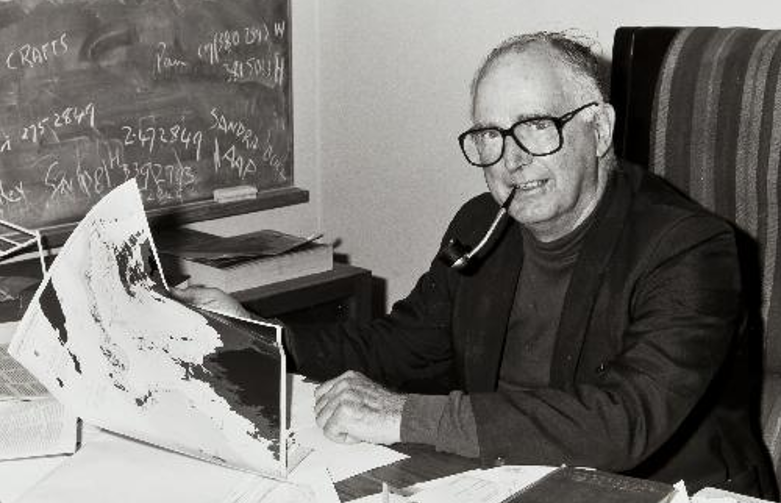
The Noel Butlin lecture is sponsored by the Economic History Society of Australia and New Zealand to commemorate the work of one of Australia’s foremost economic historians. Noel Butlin (1921-1991) was Professor of Economic History at the Australian National University (ANU) during 1962-1982. Born at Singleton in New South Wales, he took an honours degree in Economics with a University Medal from the University of Sydney. Following wartime public service in Britain and America, he had a short stint at Harvard and came to the ANU in 1951 to begin a 40 year career researching and writing about Australian economic and business history. Noel published widely and his first major book Investment in Australian Economic Development, 1861-1900 was published in 1964 by Cambridge University Press. After this he turned his attention to many other aspects of Australian economic history, including the history of economic policy, the economic development of Botany Bay and its environmental impact, and the effect of European colonisation on Australia's indigenous people. Noel’s intellectual legacy lives on. He remains one of the most widely cited Australian economic historians.
If you are currently a PhD student, submit your paper or paper proposal with proof of enrolment in your PhD program. Registration for the conference is free but your paper must have been accepted for presentation. You are also invited free of charge to the conference dinner on the 11 February 2027. For this you must register for the conference and the dinner so that we know the numbers.
A limited number of travel bursaries of A$1,000 for PhD students outside Australia and A$500 for interstate PhD students in Australia are available, but the condition is that you present your paper at the conference.
If you wish to apply for a travel bursary, please email us proof of your student enrolment and your paper proposal on: CEH.RSE@anu.edu.au. Please note that travel bursaries will be remitted to those who qualify shortly after you have attended the conference.
Graduate student registration for the conference and the conference dinner is free of charge but requires proof of student enrolment and paper acceptance before registration!
The Economic History Society of Australia and New Zealand (EHSANZ) is the professional society for economic and business historians in Australia and New Zealand. The Society publishes the Asia-Pacific Economic History Review which has three issues each year in March, July and November and special issues.

The aims of the Economic History Society of Australia and New Zealand are:
- to promote the teaching, study and understanding of Economic History;
- to disseminate knowledge in the field of Economic History;
- to encourage the conservation of historical materials and artefacts.
The main activities of the Society include:
- editing and publishing the Asia-Pacific Economic History Review;
- organisation of the annual Asia-Pacific Economic and Business History Conference (usually held in February);
- organisation of Society-sponsored sessions at economic history and economics conferences;
- awarding prizes for excellence in scholarship, service to the profession, best dissertation covering an Australia-New Zealand topic, and best dissertation covering an Asia-Pacific topic;
- sponsoring research projects and travel by new scholars in economic and business history.
EHSANZ membership: is included in a subscription to the Asia-Pacific Economic History Review. The 2026 subscription fee is £38 (UK), €53 (Europe) and US$55 (USA and rest of the world), which is about A$65 - A$75.

Welcome reception: Wednesday evening 10 February 2026 in the conference venue.
Conference dinner: Thursday evening 11 February 2026, in University House on the ANU campus.
Farewell drinks: Friday evening 12 February 2027 in Fellows Cafe and Beer Garden of University House.
At other times: conference participants can explore Canberra's the culinary offerings. The Australian National University is located close to the centre of Canberra. There are several restaurants located close to the conference venue. Many more are within walking distance of the university campus.
Canberra is located 300 kilometres southwest of Sydney. It is easily accessible from Sydney Kingsford Smith Airport by plane, train, bus or car and from Western Sydney International Airport by bus or car.
Accommodation: Canberra is Australia’s capital city. When both houses of Parliament are sitting, it can be quite busy. The sitting days of parliament have not yet been released. If parliament is not sitting during the days of the conference, several hotels in Canberra are likely to offer special low rates. Here are several hotels that are within walking distance of the conference venue:
- University House (fully renovated and recently reopened, on the ANU campus)
- Novotel Canberra
- Quest Canberra
- Quest Canberra City Walk
- Mantra on Northbourne
- Avenue Hotel Canberra
- Ovolo Canberra
- Peppers Gallery Hotel Canberra
- QT Canberra
Other hotels are only a short bus ride away.
Student dormitories on ANU campus that may be offering short-term accommodation during the summer break (December to February) are:
Travel: Canberra airport is located close to the centre of the city and the ANU campus. There is a taxi rank at the airport and a taxi ride will take about 15 minutes. There is also regular Rapid 3 bus service between the airport and the centre of the city. Ticket details are here. Conference participants who come by car, paid parking on campus is available and uses PayStay online payment.
The Australian National University has a leafy and scenic campus for conference visitors to explore. They may want to visit the
- Noel Butlin Archives Centre in the Menzies Library. It has regular exhibitions about its collections
- ANU Classics Museum in the AD Hope building
Canberra has various attractions. Conference participants may want to take time before or after the conference to visit the ones that are walking distance from the city centre and are free of charge to enter:
- National Film and Sound Archive
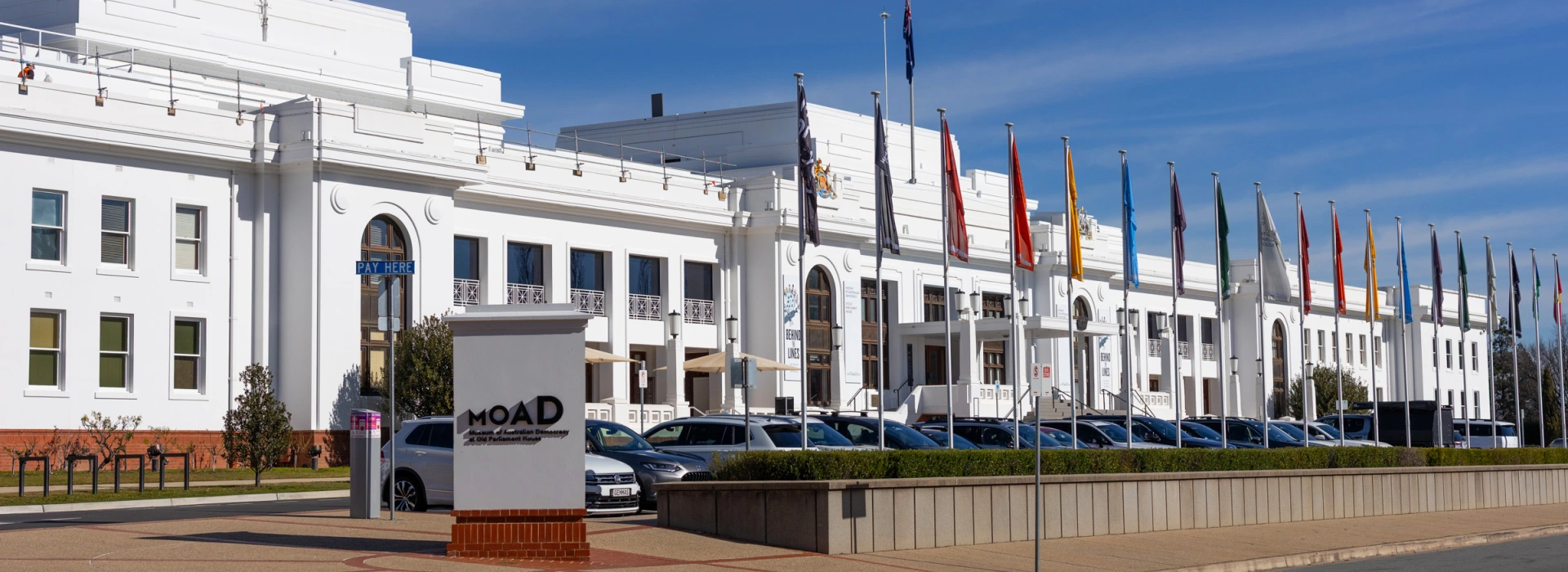
- Old Parliament House and the Museum of Australian Democracy
- Parliament House
- National Archives of Australia, which has regular exhibitions about its collections
- National Library of Australia, also with regular exhibitions about its collections
- National Portrait Gallery
- National Gallery of Australia
- Australian War Memorial
Important Dates
- Submissions due: 23 October 2026
- Decisions notified: 6 November 2026
- Registration due: 27 November 2026
- Event dates: 10-12 February 2027